
Flooring Contractor in Miami, FL - Floors Built on Tested, Prepped Slabs
Stonegate Epoxy Floors of Coral Terrace is a flooring contractor working in Miami, FL, coating garages and shop floors, restoring terrazzo and resurfacing pool decks, with the slab tested and prepped before anything goes on it.

Flooring work across Miami's homes and shops
Our Miami jobs run from older single-family houses, where terrazzo often sits under carpet or tile, to garages, pool decks and the shops and warehouses property managers call us about. As a flooring contractor in Coral Terrace, FL, we're close by and do the same work in South Miami, Coral Gables and across Miami-Dade, so the slabs here look familiar. Concrete in these houses has usually been painted, glued, tiled over or patched more than once, and part of every visit is working out what's really under the finish.
The price here moves mostly with the slab, meaning its size, its cracks, what has to come off it and how damp it tests, plus the system you pick. The schedule turns on that same prep and on the weather, and your own figure comes after I've seen the floor. On Miami ground a slab that looks dry can still be holding water from below, which is why the testing comes first.
Floor and concrete work we do in Miami
Most Miami epoxy calls are for garages and utility rooms on older slabs, so we grind and patch first and only then roll the coating on.
Commercial & Industrial Epoxy Floor Coatings
Learn more about Commercial & Industrial Epoxy Floor CoatingsProperty managers with Miami shops and warehouses call us for floors that stand up to forklifts and daily cleaning, and we plan around when the space can close.
A Miami garage holds the car, the tools and a lot of humidity, so we test the slab before a flake or solid-color coat goes down.
Polyaspartic sets up faster than standard epoxy, which suits a Miami family that can't give up the garage for long, as long as the slab tests ready for it.
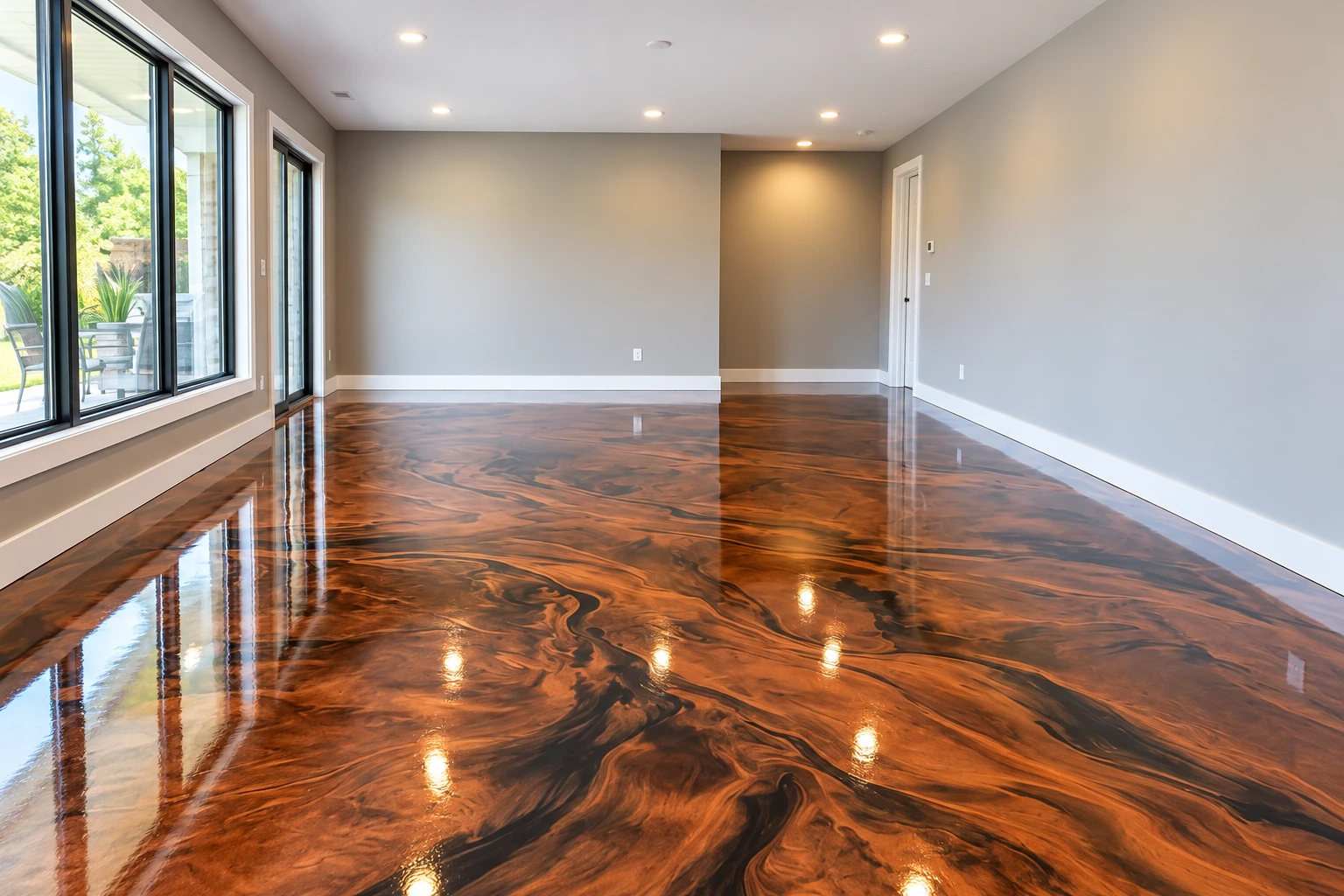
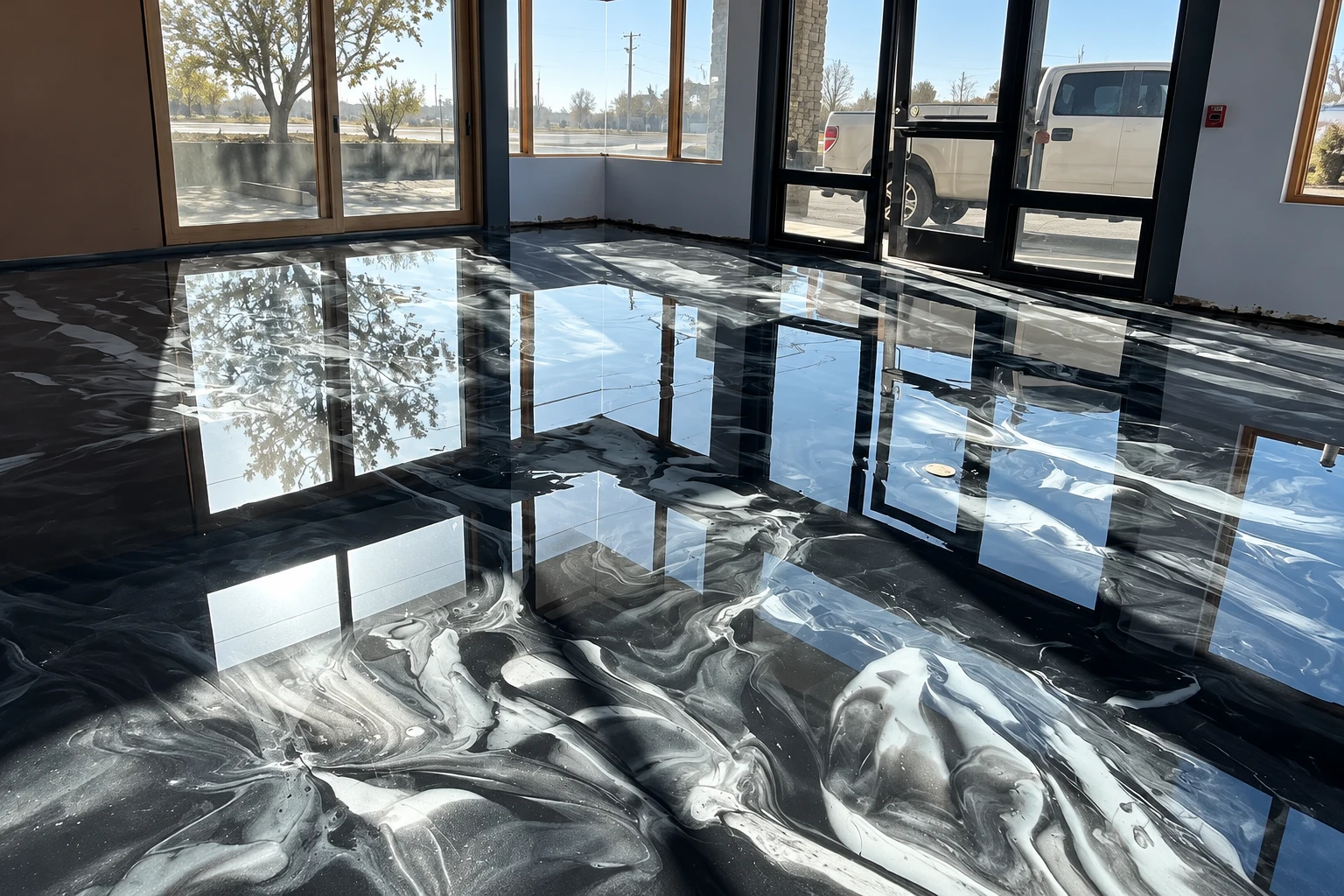
In a living room or a showroom, metallic epoxy gives a swirled, glossy look, and it shows every flaw underneath, so the prep matters most.
For Miami commercial kitchens and wash-down rooms we usually point to urethane cement, because it handles heat, hot water and constant moisture better than epoxy.
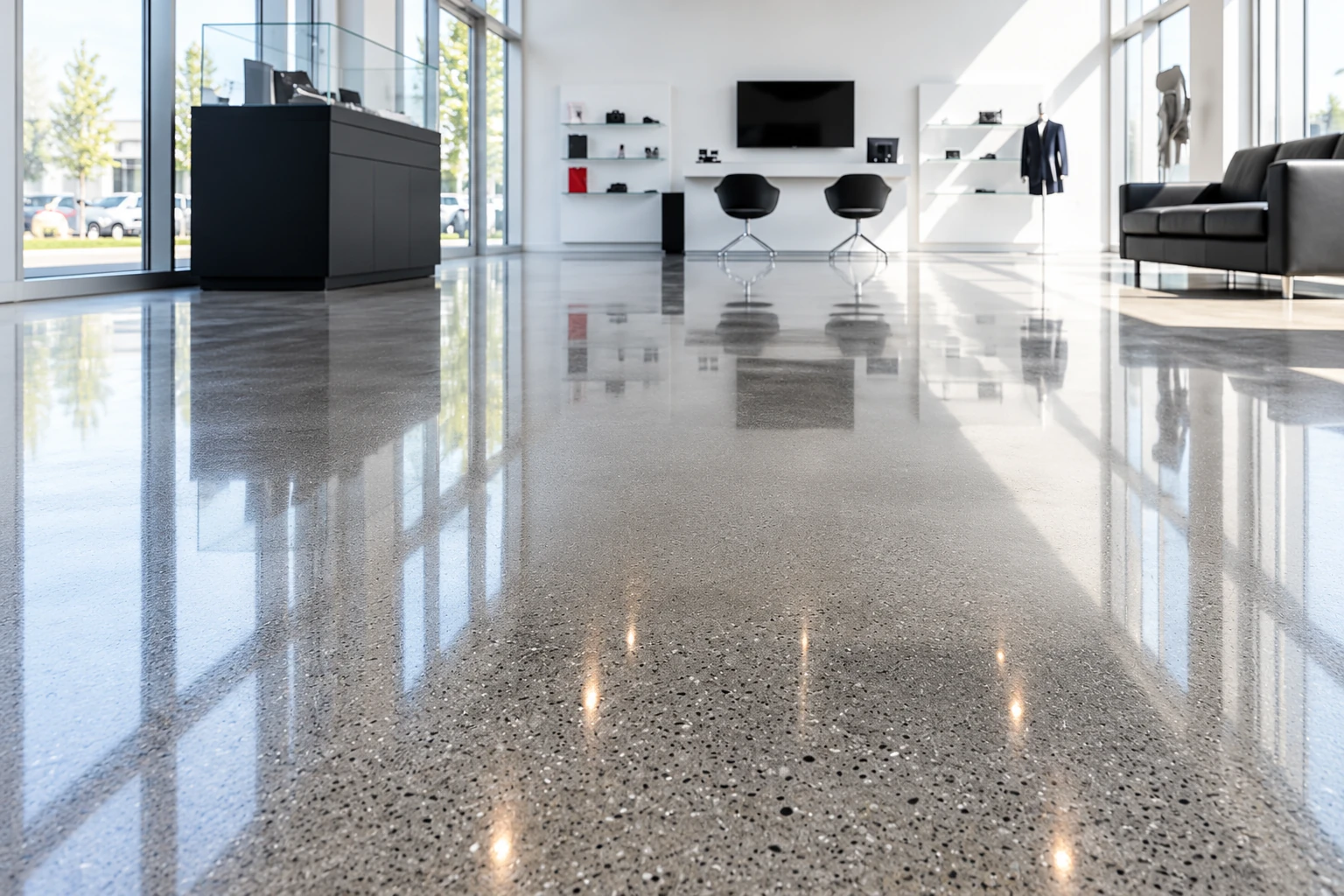
Plenty of Miami homes and storefronts sit on slabs that can be ground and polished into the finished floor, with no coating on top to peel.
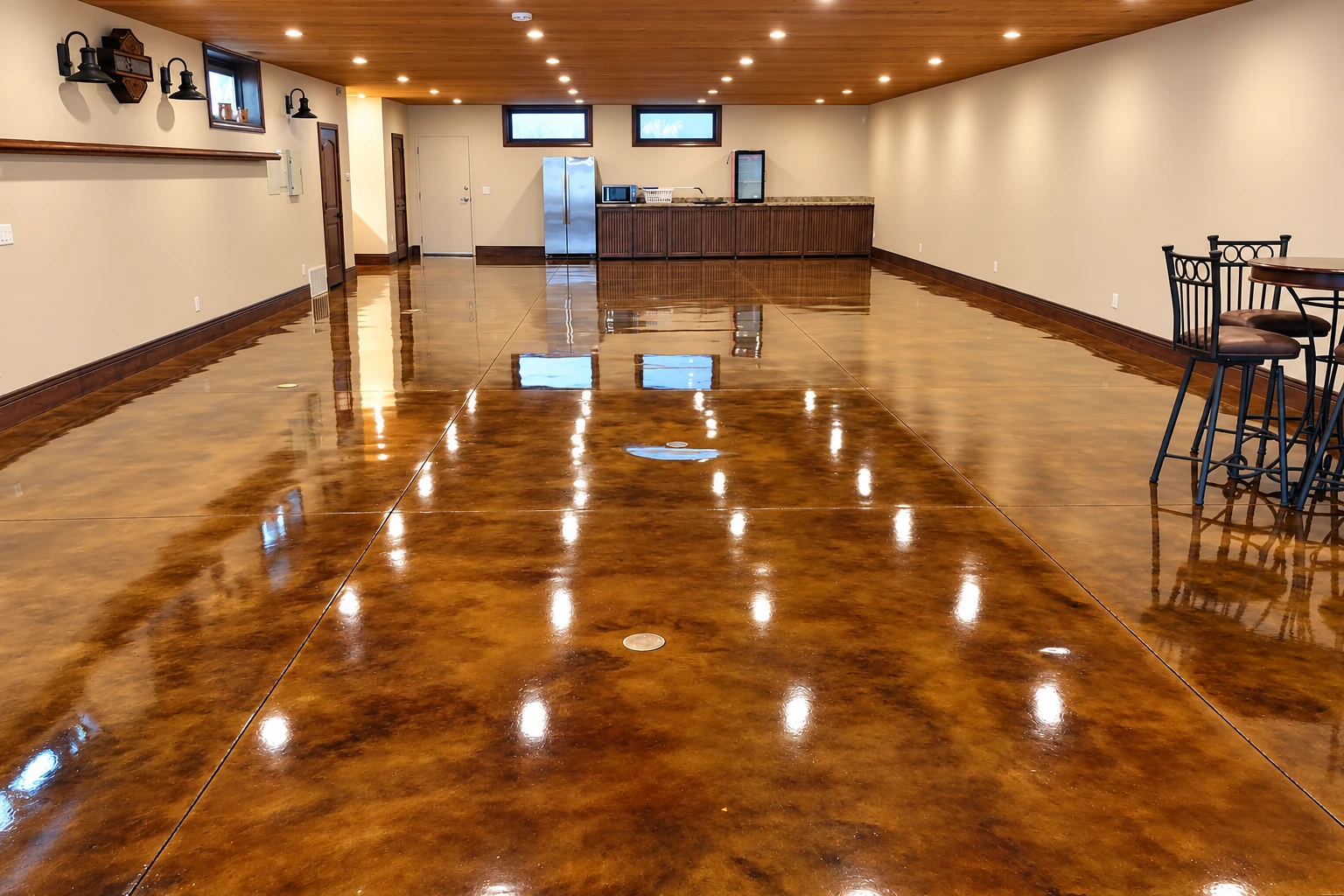
Stain gives a patio, lanai or interior slab color without a thick coating, and how it takes depends on how that concrete was poured and cured.
Older Miami houses often hide terrazzo under carpet or tile, and we grind, patch and polish it back once we see what's been under there.
Basements are rare in Miami, so this usually means a low ground-floor room or storage space that stays damp and needs a coating picked for moisture.
Every floor we put down here starts with grinding off old sealer, glue and the weak top skin of the concrete, so the new coating grabs solid slab.
Sun and summer storms wear on Miami driveways, patios and pool decks, and a good sealer slows that wear down between bigger jobs.
When a slab is stained, patched or spalled, which means its surface is flaking, an overlay gives it a new top layer if the concrete below is still sound.
Older Miami houses with additions often have slabs that dip or step between rooms, and self-leveling compound flattens them before the new floor goes down.
Miami pool decks bake in the sun and get soaked in storms, so we repair cracks first and pick slip-resistant textures that stay cooler underfoot.
We strip old epoxy, paint, tile glue and failing coatings from Miami floors, because a new coating is only as good as what it sits on.
What Miami slabs and homes ask of us
You can count on plain answers about your slab, prep done before anyone talks about shine, and an owner who'd rather answer one more question than have you guess.
Owner on site
I look at every Miami job myself and stay on site while our crew does the work.
Slab tested before coating
Damp slabs are common here, so we test the concrete before choosing a system that can live on it.
Prep before polish
We grind, fill cracks and clear old glue or sealer first, since that's where a floor holds or lets go.
Unknowns named up front
I tell you what the slab shows now and what nobody can promise until the old floor comes up.
Licensed, insured, guaranteed
We're fully licensed and insured, and the work is backed by our satisfaction guarantee.
Questions we hear in Miami
How do I find out who handles permits for a floor job at my Miami home?
Inside Miami city limits, the City of Miami's own building official handles permits, and Miami-Dade County sends residents of cities like Miami to their city's building department. The city's permit catalog lists permits such as roofing and fences, so whether your floor job needs one turns on your address and the work, and plenty of Miami mailing addresses sit outside city limits. We check early which office covers your property, tell you what we find, and if a permit is needed we apply for it as your licensed contractor.
What does a contractor need to be certified in Florida?
A certified contractor in Florida has to pass a state certification exam first, and building contractor applicants need four years of experience or a mix of college and experience. They also attest to liability and property damage insurance at levels the state board sets, and get workers' compensation coverage or an exemption within 30 days of the license being issued. The City of Miami's finance department has said a Business Tax Receipt is required for any business, profession or occupation in Miami, and we're fully licensed and insured if you want to talk through what that means for your job.
What causes damp slabs and flooding in Miami after heavy rain?
Miami-Dade sits close to sea level with its underground water just below the surface, so after a major rain the water sometimes has nowhere to drain, and the county calls itself particularly prone to flooding from big rains and storm surge. For your floor, that means a garage or ground-floor slab can carry moisture you can't see, and a coating laid over it can lift. That's why we test the slab before we pick a system, and on a wet slab we steer toward one made to handle moisture.
How much does an epoxy garage floor cost in Miami?
The price of an epoxy floor in Miami turns mostly on the slab, not the coating, so I give you a number after I've seen it. Size matters, and so do cracks to fill, old paint or glue to grind off, how damp the concrete tests and the system you choose, from a solid color to flake, metallic or a faster polyaspartic topcoat. Because the estimate happens on site, the figure reflects your floor.
How long does an epoxy floor take to install in Miami's humidity?
How long a Miami floor takes depends mostly on how much prep the slab needs and how dry it tests, so I can give you a schedule once I've seen and tested it. Humidity also affects how coatings cure, and Miami's normal rainfall has been trending up while its nights have been getting warmer. So we plan coating days around the weather instead of forcing them in.
What is the best way to restore old terrazzo floors in a Miami house?
The best way is usually to grind the terrazzo past its scratches and stains, fill cracks and chips, then hone and polish it back up instead of coating over it. In older Miami houses it's often been under carpet or tile for years, so glue, tack strip holes and old patches only show once it's uncovered. I'll tell you what I can see at the estimate and what we'll only know once the cover comes up.
Don't see your city? Call us
Pick another city below to see what we do there, or call (305) 786-6170 if yours isn't listed, since we work across Miami-Dade.
Ask Stonegate for a Miami floor estimate
Call (305) 786-6170 or use the form, because a few questions answered now beat guessing later about what's under your floor.